
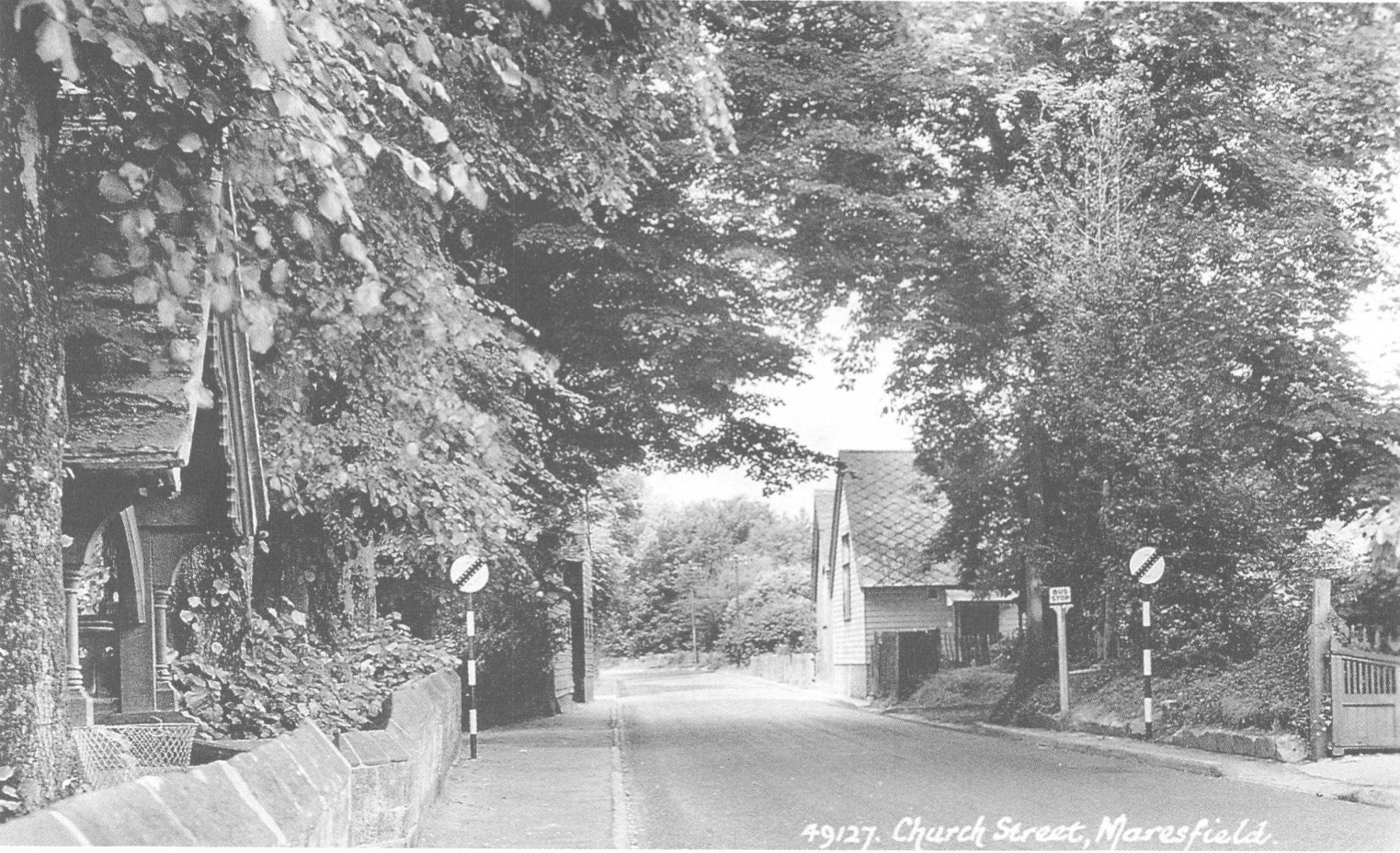
The site of the Village Hall (originally called the Maresfield Reading Room) was once a slaughter house.
It is not known when the Maresfield Reading Room was first built as records are only available from 10th January, 1924 when a meeting was called to decide what should be done with the money (£209-6-8d) raised by the Village Féte in 1919 (see picture) which had originally been intended to extend the Reading Room.
Present were The Revd A.C.D. Ryder (chairman), C. Wickham Snr, C. Wickham Jnr, L. Skipworth, J. Knight, C. Brown, E. Hazelden, E. Brown, B. Ford, G. Thomas, A. Cosham, A. Brown, J. Steel, F. Butcher, G. Chatfield, E. Ford, G. Goff, C. Rintoul and Miss Philippa Ryder.
Documents were read explaining that the recreation ground was parish property under the control of the Parish Council but the Reading Room was only lent for the use of the parish and was still the property of Maresfield Park Estate. As the future of the Estate was not settled following its confiscation from Prince Münster in 1914, it was decided to postpone any decision for the time being. Mr C. Brown proposed that the Fund should be invested in the Lewes Building Society at 4% interest, subject to the condition that it might be withdrawn at any time as required.
At a further meeting on 10th October, 1924, the Revd Mr Ryder said he had interviewed Mr Thomas Place of Northallerton, Yorkshire who had by then acquired the property, with a view to purchase. Mr Place valued the Room at £200 but was willing to sell it to the Parishioners of Maresfield for £100 and he would himself contribute £75 leaving the village just £25 to pay. The Revd Mr Ryder on behalf of Maresfield accepted this generous offer and on 9th February, 1926 the Maresfield Reading Room was legally purchased by the Trustees on behalf of the village. The area bought contained eight perches or thereabouts. The Trustees were the Revd A.C.D. Ryder, Mr C.A. Wickham (Grocer) and Leslie Skipworth (Butcher).
In 1926 the Village Hall as it was by then called was extended after a second gift of a 30ft frontage of land from Thomas Place. £120 was borrowed from Lewes Building Society and the Parochial Council gave £50. Fifty chairs were purchased for 6/- each and Mr Durrant decorated the old part of the hall for £42-15-0.
On completion the Hall was insured for £1000.
In 1928 a strip of land 20 inches wide and 30ft long at the rear was purchased from Doctor E.F. Maynard who then lived next door at ‘Newnham Cottage’. Later a toilet block was added.
The Village Hall has always had a very representative committee. In 1954 the committee consisted of six elected members and trustees, one member from the Church Council and one each from the Bowls, Cricket, Football, Tennis and Stoolball Clubs and the Women’s Institute.
The Charity Commission document dated 21st January 1966 gives the use of the property as follows:
“Held on trust for the purposes of a Village Hall for the use of the inhabitants of Maresfield and the neighbourhood thereof without distinction of sex, political, religious or other opinions.”
During the Second World War the Village Hall became the centre of social life for thousands of English and Canadian soldiers stationed at the camp who attended the numerous dances. The bookings register shows the period 1941 to 1944 was the most heavily booked period in the hall’s history.
Mr C. Wickham Snr followed by Mr C. Wickham Jnr served as Trustees for half a century until 1976, when Mr Bernard Russell of Mockbeggars Farm took over as Secretary/Treasurer.
Extract from “Maresfield”, by Betty Turner , © 1991 Betty E Turner


Leave a Reply
You must be logged in to post a comment.