
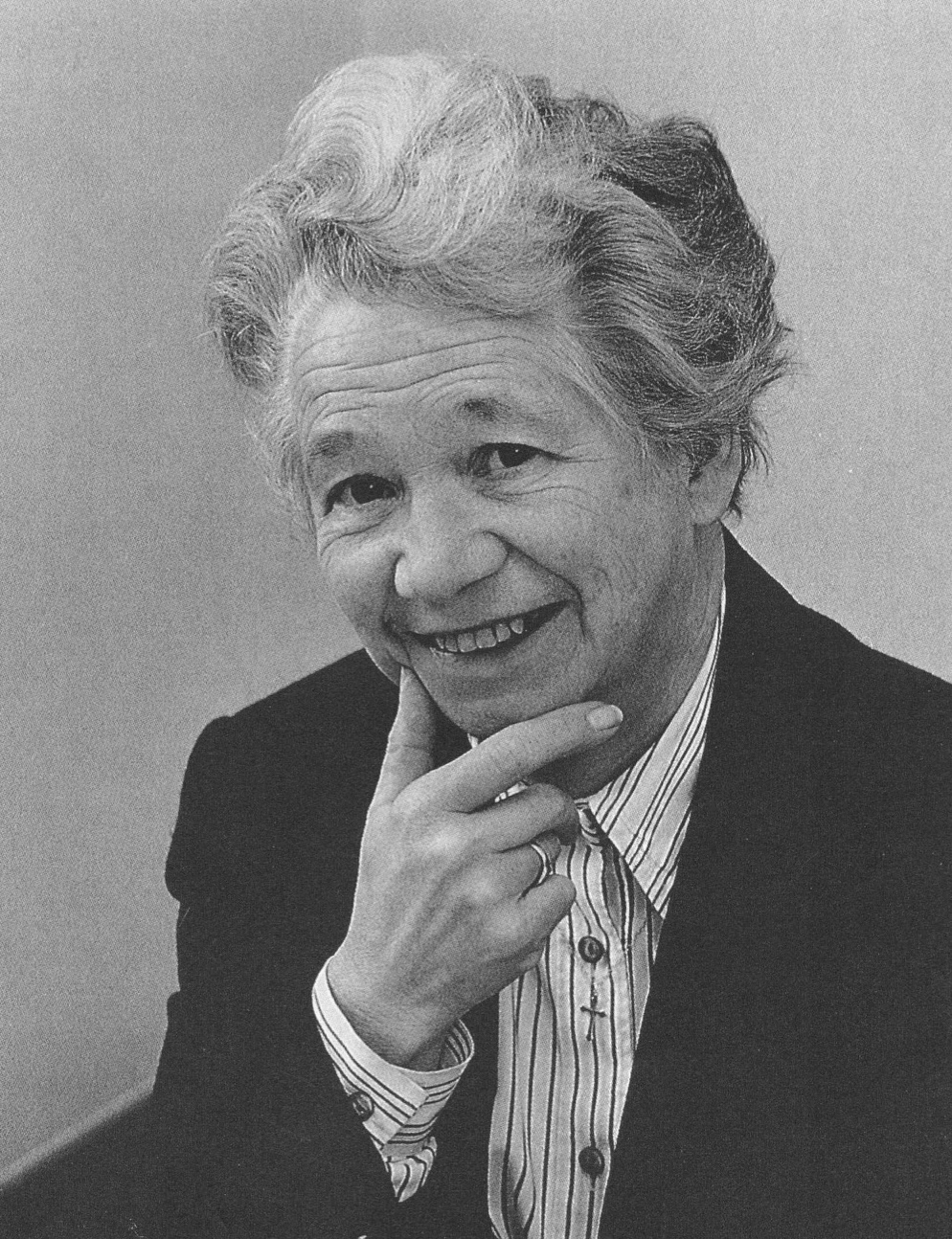
Betty Turner, 1991
I arrived at Maresfield on 18th March, 1941 in an army vanette as my father was attached to the newly-opened D.C.R.E. office in Maresfield Park. He had managed to rent a large house and garden that had been part of the stabling block of the Manor House of Count Münster, who had left Maresfield at the outbreak of the Great War in 1914. Between the wars some building had gone on but the main drive was mostly unspoiled. The large field where Henry Boot built his luxury houses in the early 1960s had a spreading oak tree in the centre and the bluebells as big as hyacinths grew round it.
It was a beautiful Spring day and our garden, which was terraced for the lower part, with fruit trees in the upper part, had wild daffodils which really did dance in the breeze. The lime trees in the main drive were in bud and my first impression, even as a nine-year-old child, was how lovely it all was and how far removed from war and the circumstances that had brought us there.
Our house was then known as ‘Rest Harrow’, being named after the Welsh flower by a retired nurse, Miss Chapman, who had resided there and had a life interest in the property. In later years when she died my parents bought the house from a nursing association.
The building was very substantial and had been built in 1900 with no expense spared. The walls were 18″ thick and the oak doors had iron studs. It was like living in a fort.
One of the lucky breaks in my life came in August of that year, when the adjoining part of the stable block known as ‘North Cottage’, which had been empty, became occupied by another civil servant, Charles Sears, his wife Kathleen and daughter Thelma. Thelma was one year, one month and ten days older than I. (How precise we were in those days!) We formed a friendship that was to last a lifetime.
Life in the village was still very static and closed, and Thelma and I were viewed with suspicion as we were ‘from away’, some children were unfriendly, bordering on hostile towards us. However, Thelma and I stuck together and the retired ‘colonial’ types who had settled in the developed part of the Park quite liked us, for we were reliable and willing, and could be trusted to collect for the many good causes of the time – the S.S.A.F.A., the R.A.F. Benevolent Fund, King George’s Fund for Sailors etc.
As there were virtually no private cars on the road in 1941, we were very useful in helping to carry bags to and from the buses, which were always well patronised and a very reliable service. Fares were a gift – 2d to the top of the town in Uckfield and 3d to the Bus Station. It was 2/6d to ‘The Wells’, where everyone went shopping, as Brighton was in the Front Line of defence and one could not go without a permit. We also had hourly services to East Grinstead and Haywards Heath.
Food became scarcer each year into the war and we spent endless hours gathering blackberries, rose hips, chestnuts, watercress, mushrooms; in fact anything edible. We had a preserving ration of sugar which came in large 4lb Tate & Lyle boxes and it was these large boxes that Thelma still recalls my Mother insisting we filled.
My Mother, who had a full time task in caring for my mentally handicapped Brother, rather dominated the domestic scene as Mrs Sears had taken on a man’s job and worked as a telephone engineer. Our Fathers worked long hours and then often returned to work to fire watch, and Mr Sears was in the Home Guard.
We were always busy running errands, cycling to Uckfield to join the queues for any additional food off the ration, and to get our pet food at the Diplock’s Horse Meat Shop in Framfield Road (now the ‘Hobby Box’). We were lucky in Maresfield as our village grocer, Mr C.A. Wickham, and butcher, Mr A.J.H. Bayley were both upright, fair-minded men, who kept fairly to the rationing.
One of our claims to fame was collecting 12/- for the Red Cross carol singing and having our names in the Sussex Express. We also weeded the garden of the village representative of the Red Cross (Mrs Clark-Jones of Park Farm) for 4d an hour, and she really expected her money’s worth! The school put on a folk dancing display on the lawn at Miss Hammer’s in Millwood Lane and it was my job to wind up the gramophone.
There was a considerable amount of land with ‘North Cottage’ and Mr Sears invested in some Khaki Campbell ducks (which came to a sad end with a fox), some heavy Light Sussex chickens, a Red Setter dog called Shelagh, whom we rescued several times from snares as poaching was rife.
But the best-loved animals were the goats, which we took for walks on halters round the Park. Honey, the nanny, was a friendly creature, but some of her kids were less pleased to be exercised in that way. We all enjoyed the milk and cheese which they provided.
We both had rabbits, all of which had elaborate names. Some of the names were taken from the Knock-Out comic which was the treat of the week, along with our 3oz sweet ration.
Miss Read lived at Lampool Lodge and was a great friend. She kept a small holding and we lent a hand at haying time when she and Spangles, the grey horse, took the cart to collect the hay at ‘Dalveen’ (the Bailey family), ‘Berigem’ (Mrs Robinson, later to marry Admiral Rundle) and, of course, in the big field I have already mentioned.
Bird life was abundant. Green woodpeckers pecked the ants on our terraces, nightingales were common, and as we swung on our swing, the owls hooted and swooped by in the evening.
Mr George Kirby, who lived in a cottage at the Horney Common end of the Park, called every Saturday morning with a trug of vegetables and fruit. He was a real countryman and took me to see a badger sett down the sunken road one evening. As it was dusk and we were quietly waiting, we were rewarded by the sight of the badger and her cubs. He also showed me how to skin a rabbit and pluck a pheasant, skills which I still find an asset.
School at Maresfield Bonners, under the headship of Mr Albert Edward Cosham, was endured rather than enjoyed. The school was one large room, in which three classes were held, which was very distracting to say the least. The ceiling was open to the exposed rafters, and the only heating was a centrally sited tortoise stove that sometimes belched black smoke and sometimes roared and burnt itself out!
The toilets were outside in a little courtyard and were wooden seats with buckets and no running water.
Mr Cosham should have been a farmer as he was more interested in the school pigs that were kept in sties in the playground and for which we were asked to bring our scraps to be boiled up in buckets. The pigs received our scraps, but I never remember ever having a piece of pork!
We all had a patch of garden each to tend round the school. On one occasion, just to get outside, Thelma brought some dried tea leaves to plant, pretending they were seeds.
Mrs Cosham was ten years her husband’s senior and a very different type of person. Her rare visits to school on relief were always appreciated as we had the powder paints out and did stickprinting with wooden shapes to make patterns.
Corporal punishment was to the fore, and Mr Cosham was free with his stick for boys and girls alike. His ‘clump’ (the back of his fist) was used daily.
Mrs Kathleen Kenward (wife of Rowland Kenward, the undertaker) was a large lady who took the middle class and needlework, a subject that neither Thelma nor I excelled at, and on one occasion I was severely ‘shook into next week’ for not paying attention and being rude.
The educational side was minimal, as most girls went into service and the boys into gardening or labouring. We had to provide our own stationery and there were few books available. Occasionally a pupil won a scholarship, but even then they did not always take up the place at Grammar School as the uniform was expensive and some parents were still suspicious of going out of their class.
It was a Church of England school and therefore links with “St Bart’s” the village church were strong. Two rectors spanned my time at Maresfield Bonners. The Revd A.C.D. Ryder was a lovely old gentleman and a great botanist, who showed us flowers, some of which I have never seen since. I especially remember him introducing us to Danes’ Blood and Butchers Broom.
When the Revd Mr Ryder retired he was followed by the Revd Frederick Howard Sheldon, a fine man, who had been a chaplain in the 1914-18 war, and who was one of my childhood heroes. Years later, in the Swinging Sixties, I told my children I never missed Pop idols, discos, clubs or similar out-of-school activities, as the Church more than compensated!
The whole school went to church one morning every week for a short service, and then learned about the history of our church and the structure of the Church of England. Almost all the village children went to Sunday School, which the Sheldons went to great lengths to make interesting. We all received a picture stamp with a text for attendance. Mrs Mary Sheldon played the piano, and we continually learned new and different hymns and choruses. Mr Sheldon wrote them all in large print on cards and held them up for us to learn line by line. Build on the rock and not upon the sand was his favourite.
We had competitions, which Thelma and I eagerly entered and won several times. For prizes, Mr Sheldon provided reading books.
Mr Sheldon collected stamps and army badges himself and encouraged our flower collections and hobbies, including after-church walks.
The only treat we had was a Christmas Party with the church ladies providing the food. They made a noble effort but as most were elderly and lived alone it must have been difficult. I still remember with horror the sour apple sandwiches Mrs Daisy Brown always produced. Mr Sheldon showed his lantern slides but, of course, we had to be careful of the blackout as nobody wanted to offend our warden, the good grocer!
In 1943 I started delivering papers for Hammonds, the newsagents at 1 The Parade. The family consisted of Mr R.E. Hammond, Mrs Daisy Hammond his wife, Mrs Phyllis Barr their daughter and grandson Michael. Mr Barr was away in the R.A.F. I enjoyed the job immensely and all it entailed, and continued to do it at weekends until I left school five years later. During this era Mrs Hammond found some postcards under the shop counter – old views of Maresfield – which she gave me – which formed the nucleus of a collection that became a life-long hobby.
In the summer, Mrs Barr and I together used to undertake the Fairwarp round for two weeks whilst the regular ladies had their annual holiday. It was a huge round by today’s standards, but luckily the papers were then very small, lightweight, war-time economy editions. We delivered to all the cottages on Sir Bernard Eckstein’s Estate at ‘Oldlands Hall’ and went up beyond Duddleswell Tea Rooms across the forest. The Italian prisoners-of-war, in their camp at Fairwarp, were always especially pleased to see us. On a Friday, when we had an extra load, as most people took the Sussex Express, we indulged ourselves in a drink at the Forester’s Arms as a reward on our way home. I sat outside on a wooden bench – children certainly weren’t allowed over the threshold of public houses then!
In the Autumn I went to Lewes County School for Girls, Southover, Lewes (later to become Lewes County Grammar School, after R.A. Butler’s 1944 Education Act). This meant cycling to and from Uckfield to catch the train to Lewes, as there were no early morning buses. Most of us left our cycles at the Holly Bush Café in the High Street (now under Bell Walk).
Back in the village, the population had greatly increased, as more and more army personnel came to the camp in preparation for the European landings. Soldiers were under canvas everywhere and camouflaged netting hung from tree to tree in the main drive of the Park. One day they silently moved out and everything was hushed up. In hope and fear, everyone prayed for victory which came to Europe in May 1945.
Thelma and I were confirmed in Uckfield Church in July 1945 by the Rt. Revd George Bell, Bishop of Chichester, travelling to the service with the Revd and Mrs Sheldon in their Austin 7, and each receiving a suitably inscribed book on the communion service from them. Shortly afterwards they left for Reigate, but returned for the dedication of the two new bells which were the village’s War Memorial.
Mr Cosham retired in 1945 and the headship of Maresfield Bonners passed to Mrs Dorothy Ann Hardman (née Hollobon), daughter of Francis Hollobon of Five Ash Down Forge and Garage. She was a dedicated lady of Victorian principles, who changed the school beyond all recognition in the next decade.
Mrs Hardman brought with her her husband John, a local government officer, and daughter Elizabeth (Eddie), who was to become another lifelong friend.
On 15th August, 1945 complete victory followed the dropping of the atom bomb and Japan surrendered. Inevitably changes followed but I shall always remember the years 1941/5 as some of the happiest of my life and be grateful for the privilege of spending those formative years in Maresfield.
– Betty Turner, 1991 (foreword to her book “Maresfield”, which you can read on the “Resources” page)
Leave a Reply
You must be logged in to post a comment.