
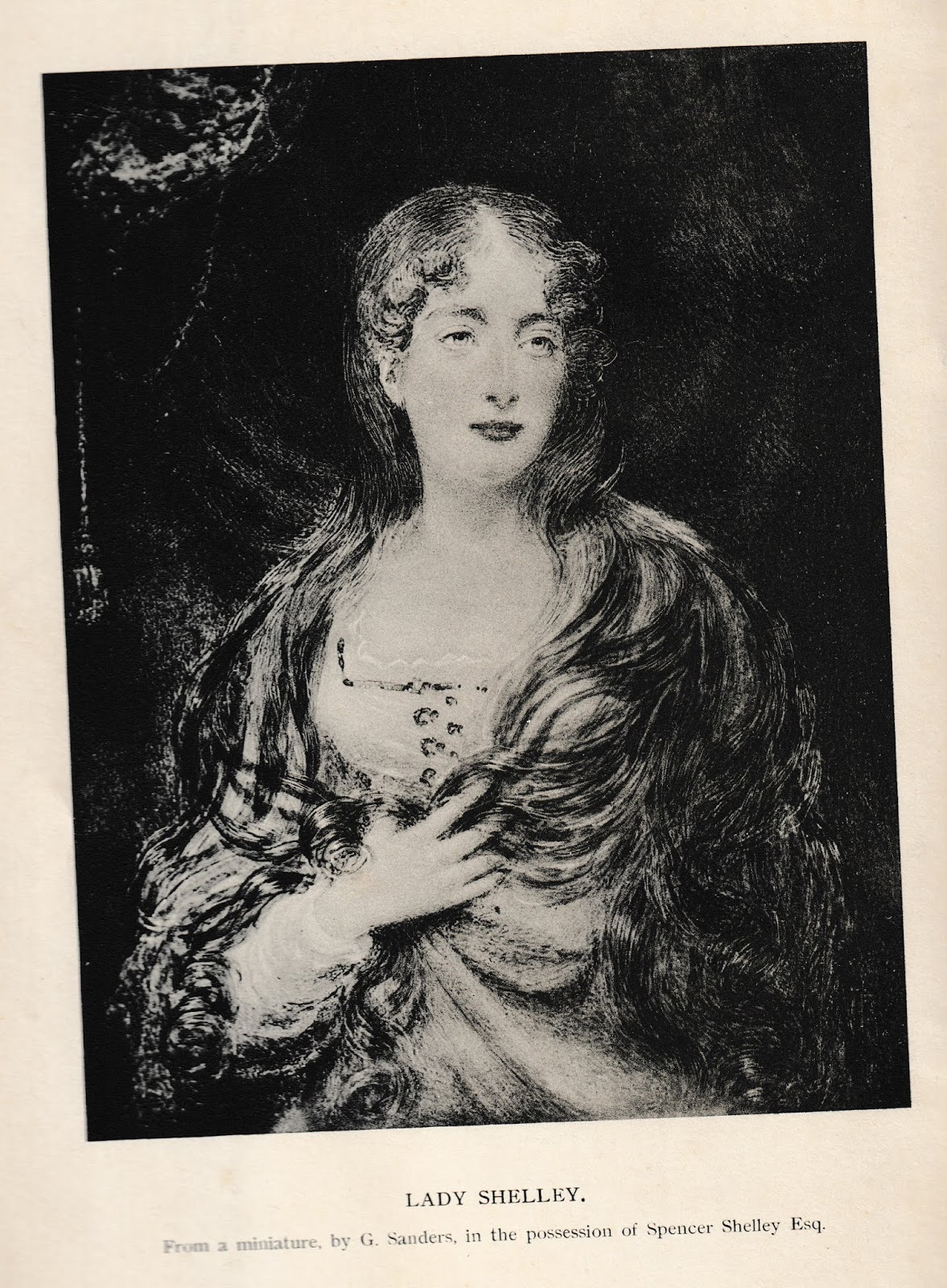
Born at Preston, Lancashire, in 1787, Frances Winckley was the only daughter of Thomas Winckley, a prosperous Preston attorney and descendant of the de Winkelmondeleys who in Saxon times had settled in a corner between the Ribble and Calder rivers.
Industry had not begun and Preston was mainly an agricultural town of broad streets and fine houses as reported by Celia Fiennes and Daniel Defoe in their travel books. In the season, the large houses hosted balls and entertainments for the county families and gentry.
Thomas Winckley died in 1794 and left Frances’ Mother a widow for the second time. Before marrying Thomas Winckley in 1785 she had previously been married to Major Hesketh, who died after being wounded in the American War of Independence.
From her first marriage Mrs Winckley had six daughters and one son, half brother to Frances, who later became Sir Thomas Hesketh of ‘Rufford Hall’.
As a child Frances was taken by her Mother to London and Bath. Whilst in Bath, Mrs Winckley married for the third time, an Irishman – Major Barrington who was a drunken gambler and she herself became ill, died in 1802 and was buried in Paddington.
Frances’ guardian, her cousin, the Revd Mr Hornby had connections with the 12th Earl of Derby (who had also been born in Preston) and who is remembered for originating the Oaks and Derby. Lady Derby was concerned for Frances’ education and placed her in Portman Square, London to study all the ladylike accomplishments of the times, including speaking fluent French.
Within a year of finishing her education Frances was introduced to Sir John Shelley, sixth Baronet, who was fifteen years her senior, and although gay and charming was also a gambler and spendthrift.
They were married at St George’s Church, Hanover Square on 4th June, 1807 after which Sir John and Lady Frances Shelley were presented at Court before embarking on a round of visits to country houses including ‘Osterley Park’, home of Lord and Lady Jersey, ‘Holkham’, Norfolk home of Coke, the agricultural reformer, and ‘Althorp’, home of Earl Spencer.
Sir John’s gambling increased and his debts forced him to sell ‘Michelgrove’ his Sussex home. Lady Shelley was making plans to buy the property back when in 1814 her husband inherited the Maresfield Estate from his uncle – Sir John Shelley’s mother Wilhemina was the daughter of John Newnham, owner of Maresfield Park.
Early in married life Lady Shelley had discovered her husband had other relationships but she was determined to stamp these out and make a success of the marriage. To this end she laid out £70,000 improving the newly acquired property at Maresfield Park. A new wing was built by Wyatt and a new library added.

The Shelleys travelled widely in Europe visiting the highest in the land wherever they chose to go, accompanied by servants, horses and guides. We are however told they were always glad to return to their children and to Maresfield. They had six children, four boys and two girls and their marriage went from strength to strength. Sir John adored his brilliant, witty, artistic and knowledgeable wife and revelled in her success.

Lady Shelley never forgot Preston and kept in close touch and returned frequently. The elegant Winckley Square was built on the former Town End Field which she sold for development to a William Cross, bears her family name and has now been designated a conservation area.
Sir John died 28th March, 1852 aged 81, and the Duke of Wellington died later that year.
In 1868 then aged 82 Lady Shelley had a house built on the Isle of Wight at East Cowes and named it ‘Maresfield Lodge’ a name it still bears today. Here she intended to collate her diaries and journals with a view to publication after her death
However, she did not get far but they were edited and published in 1913 by her grandson Richard Edgecombe, son of her daughter Fanny.
During Lady Frances’ residence at Cowes her friendship with Queen Victoria deepened and during her illness, the Queen sent frequent messages and shortly before her death on 24th February, 1873 Her Majesty paid a personal visit to the bedside.

